
OBSERVATIONS
Three Studies of Human Presence
Observations brings together three moving-image installations that explore the subtle transitions shaping everyday human experience. Across portraiture, urban movement, and the natural landscape, the works attend to moments often overlooked — small shifts in expression, gesture, and environment that occur between more defined events.
Exhibition Overview
Rather than focusing on dramatic events, the works in Observations attend to the fleeting moments through which human presence quietly reveals itself.
Across three distinct environments — portraiture, the movement of the city, and the open landscape — the installations observe human life from different perspectives: face-to-face, in motion through urban space, and from above within the natural world. Each work captures a different scale of observation, revealing how small transformations unfold within ordinary moments.
Together the three works invite viewers to slow down and notice the subtle rhythms of everyday life. At the same time, they create environments that are not fully grasped from a single position. Presence unfolds across multiple screens, layered sound, movement, and space, encouraging viewers to explore, shift perspective, and discover moments that might otherwise pass unnoticed.
On Sand and In Transit were developed by David Hodge, Hi-Jin Kang Hodge, and Ulf Petersson, with music by François Houle. Unspoken is an earlier work by David Hodge and Hi-Jin Kang Hodge, with music composed by Linda Bouchard.
In Transit
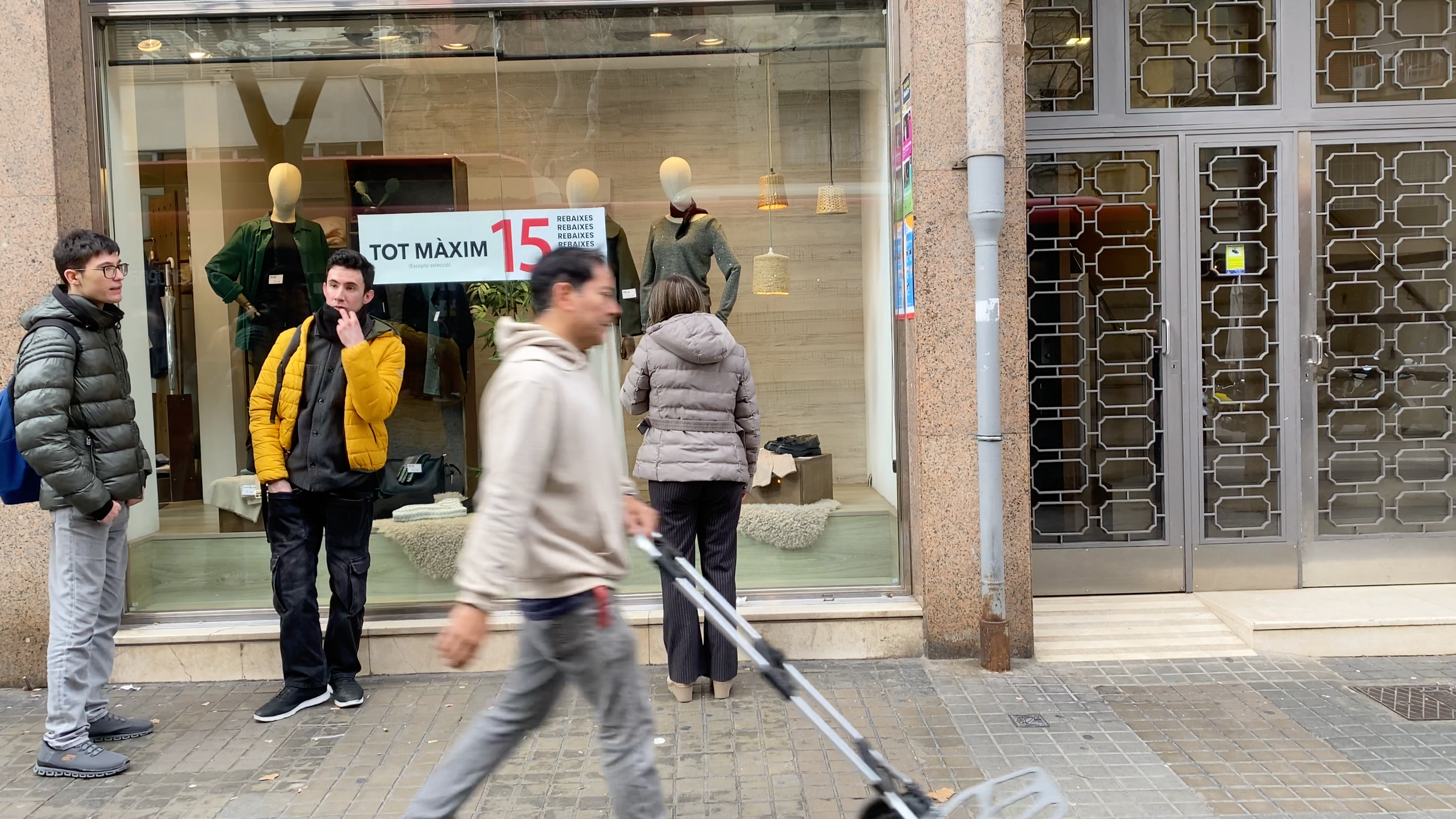
Fragments of everyday life pass through the window of a moving bus as the rhythms of the city unfold between departure and arrival.
In Transit observes the choreography of urban life from the perspective of public transportation. Filmed through the windows of buses and trams in Paris, Stockholm, and Barcelona, the work captures fleeting scenes of movement: pedestrians crossing streets, gestures glimpsed through windows, and moments of daily life unfolding in passing.
Projected at large scale, the imagery places viewers inside the momentum of travel. A soundscape composed by François Houle transforms ambient recordings — engine rhythms, door chimes, street noise, and fragments of conversation in French, Swedish, and Spanish — into a percussive composition that evokes the shared experience of moving through the city.
The work becomes a meditation on the unnoticed intervals of everyday life — the moments between departure and arrival, when we are simply passing through the world.
On Sand
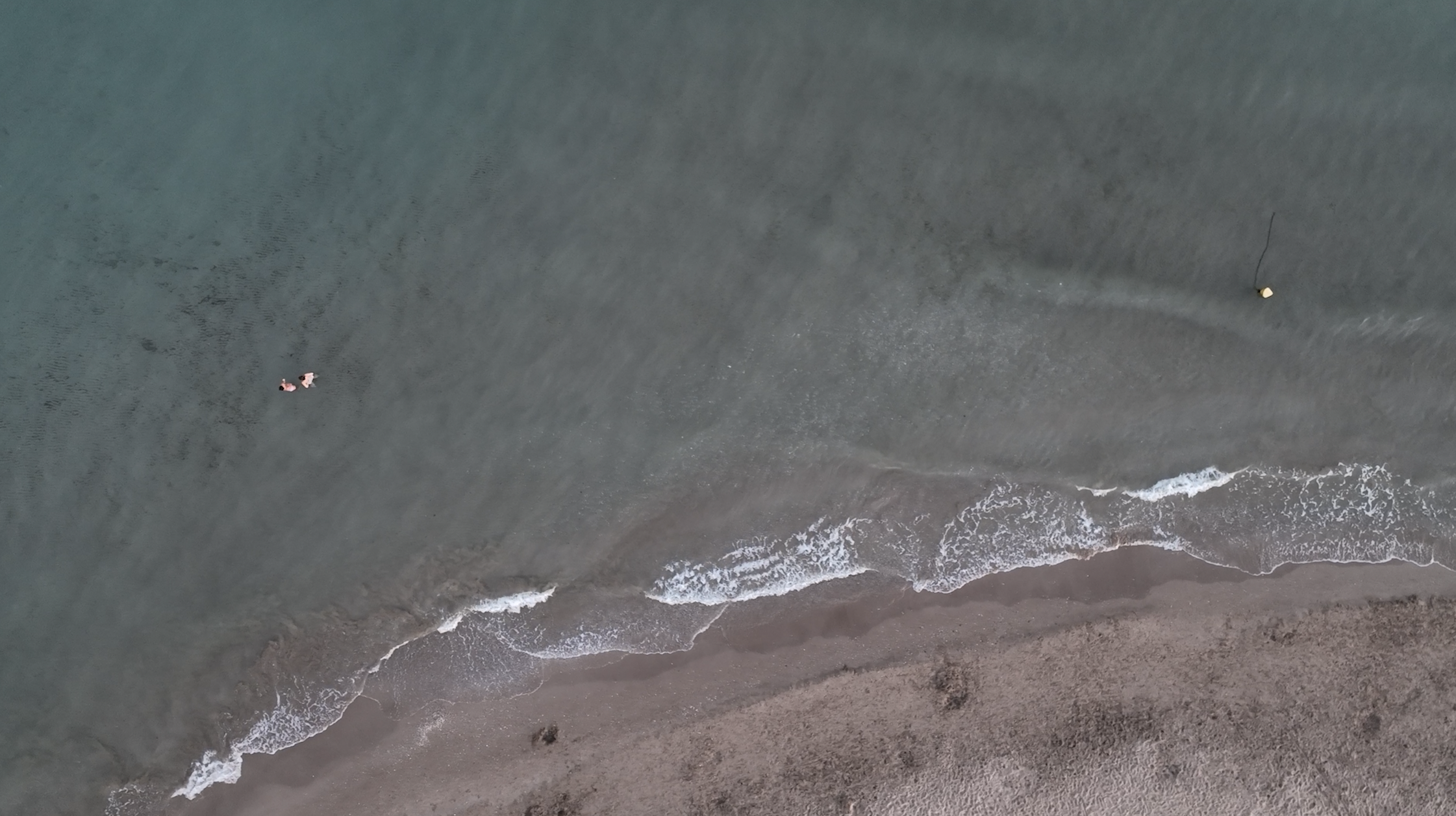
Seen from above and projected onto a floor of real sand, On Sand transforms the simple rituals of a day at the beach into a shifting field of human presence.
Filmed primarily from directly overhead using an aerial perspective, the work observes individuals and small groups dispersed across the beach. Each person or group is engaged in an ordinary action — walking, resting, laying out a towel, entering the water, playing, or drifting between solitude and companionship. These actions unfold simultaneously in different areas of the sand, creating multiple small situations rather than a single narrative scene.
The work develops a cinematic language built on repetition and variation. Simple gestures are filmed from multiple aerial perspectives — directly overhead, lower altitudes, tracking, rotating, and circling — and shaped through editing into rhythmic sequences of quick cuts. Through this process, ordinary actions begin to take on energy, pattern, and visual momentum.
Projected downward onto a floor covered with several tons of sand, the work becomes both image and environment. Visitors move across the sand as the piece unfolds beneath them, encountering different moments from different positions. No single viewpoint reveals the entire work at once; instead,
the installation invites discovery through movement, layering the observational with the immersive.
Unspoken

Seven screens reveal fleeting moments of presence as hundreds of silent portrait subjects pass through subtle emotional transitions before the camera.
Unspoken is a seven-channel video installation composed of portrait fragments recorded over the course of a year. During that time, David Hodge and Hi-Jin Kang Hodge invited every person who visited their home to sit for a filmed portrait lasting approximately one minute.
From more than three hundred recordings, the artists selected brief intervals — usually fifteen to twenty seconds — in which subtle transitions emerge. Participants often begin with visible self-consciousness, but within moments small shifts occur: a change in posture, a softening of expression, a glance away from the camera.
Displayed simultaneously across seven screens, these fragments create a field of observation in which dozens of individuals pass through quiet emotional transitions. Without dialogue or narrative, the installation reveals the delicate moments when something internal shifts and a person briefly moves from self-presentation toward simple presence.